
4 min read
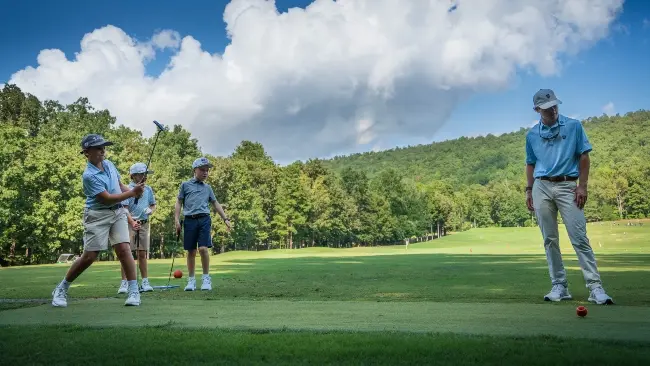
The February air just outside Birmingham carries that particular kind of cold that keeps most golfers inside, dreaming of spring.
But Parker Milam sees opportunity in the quiet. On a Saturday morning when the championship courses at Greystone Golf & Country Club sit nearly empty, a dozen youngsters between six and fourteen years old gather at the performance center, clubs in hand, ready for something different.
"We have the golf course to ourselves," Milam says, his enthusiasm cutting through the chill. "They get comfortable out here. They learn that golf can be fun while they're competing against their buddies."
This is the inaugural year of Greystone's junior match play series, a February program designed by Milam and fellow instructor Glenn Garnett for young players to bridge the gap between hitting range balls and entering tournament competition. The concept is simple but thoughtful: pair kids together in scrambles, send them out for three or four holes, and let them discover what competition feels like when the stakes are low and the atmosphere is relaxed.
For parents wondering when their child is ready for tournament golf, Milam offers an answer that doesn't come from a handbook. He's building readiness through experience, one winter afternoon at a time.
"It introduces them to tournament golf," Milam explains about the match play series. "Even if just beginning golf or to someone that's been playing a little bit of competitive golf, they get a taste for it and have something to play for. So that's really fun. And then that jumps right into our spring, kind of gearing up for summer tournament golf."
Golf Meets America’s Pastime
Twenty yards from the practice range sits a curious setup that would confuse any traditionalist: bases arranged in a diamond, golf tees positioned at home plate, and tennis balls ready to be struck with irons instead of bats. Welcome to golf baseball, where an eight-year-old's introduction to the game might involve running to first base after making solid contact with their pitching wedge.
"We want them to associate the golf course with fun," Milam explains. "This is a sport for life. They can play from age six into their seventies. So whatever we can do to make them want to come back, that's a win for us."
The philosophy extends beyond creative games. Milam, a recent Mississippi State graduate who spent seven months interning at Jupiter Hills Club in Florida under 2025 PGA Teacher & Coach of the Year Jason Baile, brings a modern understanding of junior development. Milam talks about cross crawling, hand-eye coordination, and athletic movement patterns with the same ease he discusses swing mechanics.
"We want to develop them athletically at this age," he says. "We don't want to develop them to be golfers at age eight. We want them to run, jump, and move different muscles.
The approach resonates. During Greystone's fall junior player development program, fourteen kids per session packed into golf carts, heading out to the course while members walked by offering high-fives and encouragement. When those kids had fun, they told their parents. Those parents told other parents. The program grew organically, fueled by something simple: kids actually wanting to return to play golf.
The Art of the Right Push
Setting goals for young golfers requires the touch of a craftsman. Push too hard and you create pressure that crushes enjoyment. Don't push enough and potential goes unrealized. Milam navigates this balancing act with the care it deserves.
"I try to push them a little bit, give them a bit of edge," he says. "Like, hey, let's play in this tournament coming up. Let's try to get ready for this. It's that fine line of having fun but competing. Then when they get to middle school or high school, they're used to it. They don't have the pressure and nerves because they've been building toward it."
He starts by asking juniors about their own goals, then works to align their aspirations with sound developmental principles. The conversation never begins with what the instructor wants to see. It begins with what the young player hopes to achieve.
For parents looking to support this journey, Milam offers practical wisdom born from observation. Bring your child to the course during quieter afternoon hours when the pace is relaxed. Let them tee it up again after a bad shot. Introduce them to the staff so they see friendly faces. Make the golf course feel welcoming rather than intimidating.
"Getting on the golf course with their mom, dad, or grandparents who are familiar with it, that's a great start," Milam says. "They can guide them. Then they come back and meet the staff, introduce them to a friendly face. Next time they come back, they're already familiar with someone."
A Community Investment
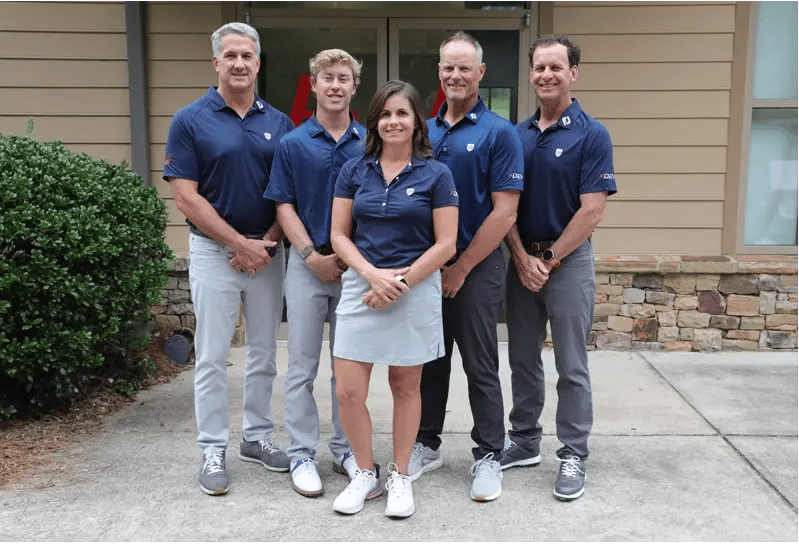
What sets Greystone apart isn't just the 36 holes of championship golf or the state-of-the-art Blackburn Golf Academy facilities. It's the culture that director of instruction Mark Blackburn and his team have cultivated, one that values long-term player development over quick results.
Milam sees this philosophy reflected in the community itself. Members don't just welcome junior programs; they actively encourage them. Parents of children in the program become students themselves, creating family connections to the game. The environment builds on itself.
"The community has been so supportive," Milam says. "From members to parents to our instructional team, that positive environment is really continuing to grow."
Eight months into his first position after graduating from the PGA Golf Management Program, Milam has found his calling in instruction. He talks about improvement with the passion of someone who has discovered his life's work.
"I love seeing someone improve," he says. "I love being part of that. Bringing fun back to a game that can be frustrating, that's what I see now and what's gotten me into instruction.”
On those cold February mornings when most golfers stay home, Milam and his young students head to the course. They'll play some match play, maybe some golf-baseball. They'll learn about competition without the weight of expectation. They will discover that golf, at its best, is something worth returning to.
The momentum continues into spring with the eight-week Player Development Program starting in March, where Milam and Garnett guide juniors through how professionals practice, apply, and play. The program offers multiple age groups and skill levels, from beginners to advanced players, each designed around the same philosophy that drives everything Milam does: build the athlete first, then the golfer.
The spring tournament season will arrive soon after. When it does, these young golfers will be ready, not because they were forced into readiness but because they were guided there with patience, creativity, and genuine care for their development.
For Milam, that's what it's all about: "I've always wanted to know why things work. Now I get to understand why and give that to other people."
That's the difference a dedicated instructor can make.
